

Being a CEO is exhausting
Not everyone is meant to be a CEO, so it's important to understand your leadership style and rethink what it means to lead.

Not everyone was born to be a CEO.
Dustin Moskovitz co-founded two large and publicly traded companies.
→ The first was Facebook, where he was Mark Zuckerberg’s roommate in college.
→ The second was Asana, which he led as CEO for more than a decade.
He stepped down as CEO of Asana in July, and after 13 years in the role, he admitted that he didn’t really enjoy it.
Dustin Moskovitz said that being a CEO was “quite exhausting” (Business Insider), showing how tiring leadership can be, especially when it’s not what you really want. His experience challenges the idea that being a CEO is always exciting and visionary. In reality, even very successful founders can get worn out, especially if the job doesn’t match their personality.
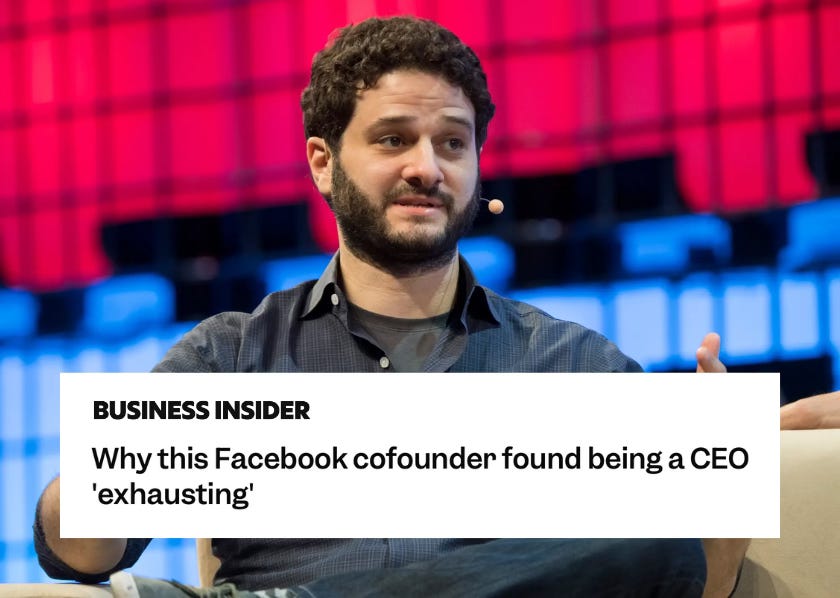
First, Moskovitz’s story shows that many leaders become “accidental” CEOs. They are promoted not because they wanted power, but becausetheir technical competence made them obvious choices. Moskovitz said he “didn’t like to manage teams” and would have preferred to “operate more independently,” like as a head of engineering. This shows that being a leader isn’t always someone’s dream, and moving up the ladder doesn’t always fit a person’s strengths. In fact, research finds that around 82% of leaders are thrust into their roles without formal preparation (Fortune). This also highlights that being technically skilled doesn’t automatically make someone a good manager, and that understanding your own strengths and limits is crucial before taking on a leadership role.

